From Email to Predictive Dashboard
Near-zero infra cost
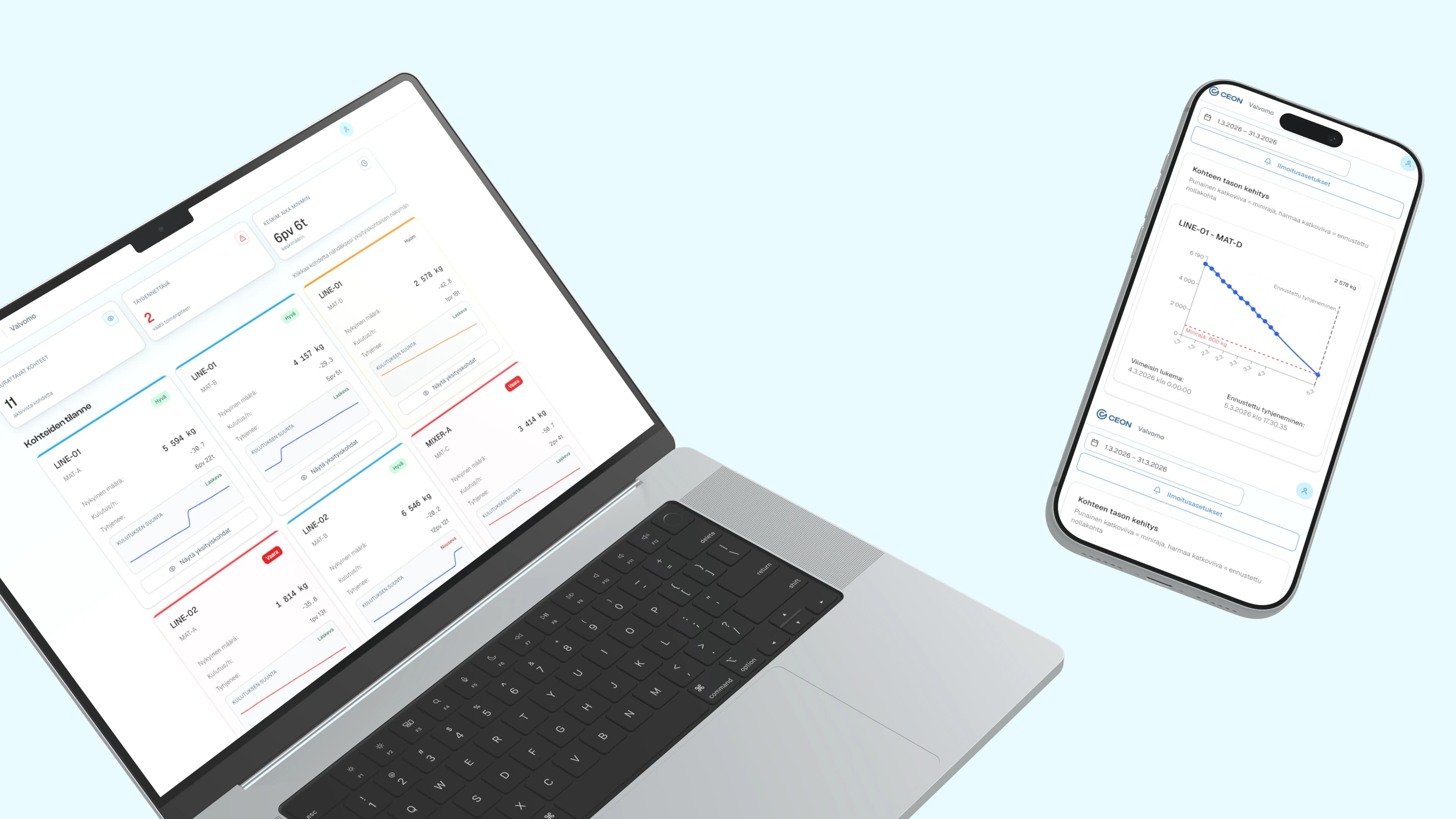
A family-owned materials company with €15 million in revenue serves industrial customers who operate storage silos requiring regular replenishment. Customer systems automatically send fill-level reports via email every six hours. Structured data, arriving reliably. But a person manually opened every email, extracted numbers, and entered them into Excel spreadsheets — multiple times a day.
The decision at the end is binary: deliver more material or not. But the process to reach that decision was entirely manual. No historical trend data. No predictive capability. No visibility into when a silo would actually run low. The data existed. The decisions were straightforward. The bottleneck was the human copy-paste loop.
The shape of the week
- 01
Discovery meeting with the owner — full scope clear within 20 minutes
- 02
Process mapping in FigJam: email → manual extraction → Excel → decision
- 03
Dashboard prototype generated using v0 (AI design tool) for rapid iteration
- 04
Visual design and specification refined in Figma with the development team
- 05
Firebase stack selected: Firestore, Auth, Hosting for near-zero infrastructure cost
- 06
Technical specification with development estimate delivered to the team
The moment that surfaced
Using v0 to generate the initial dashboard prototype collapsed what would normally be days of wireframing into hours. The owner could see and interact with a working concept in the first session. When the path from data to decision is this clear, the technology should be invisible.
What the week bought
A real-time monitoring dashboard that eliminates manual email-to-Excel data entry entirely. Automated email parsing feeds live silo levels into a visual dashboard with historical trends and predictive forecasting. Firebase architecture keeps infrastructure costs near zero.
- Automated email parsing replacing daily manual data extraction
- Real-time dashboard with silo fill levels and trend visualization
- Predictive forecasting from historical data patterns
- Firebase stack: near-zero infrastructure cost
Why the sprint earns its week
Not every project needs to be complex. The enormous value here came from recognizing that the data already existed in a structured format — it just needed to be freed from email inboxes. v0 and Figma let us show, not tell. The working prototype in the first session built more trust than any proposal deck.
Want this kind of result? Start with the version that matches your situation
These pages break the work down by the problem teams usually feel first, before they know what kind of engagement they actually need.
Service Transformation
AI Workflow Design Consulting
Use AI where it removes real friction in research, operations, and product work, not where it just adds a layer of hype.
Service Transformation
Internal Tools Consultant
Fix the workflows your team actually lives in every day, not just the customer-facing product everyone remembers to improve.